Building on Manizales' Hillsides: What Every Property Owner Needs to Know
By Gustavo Piedrahíta · April 9, 2026 · 5 min read
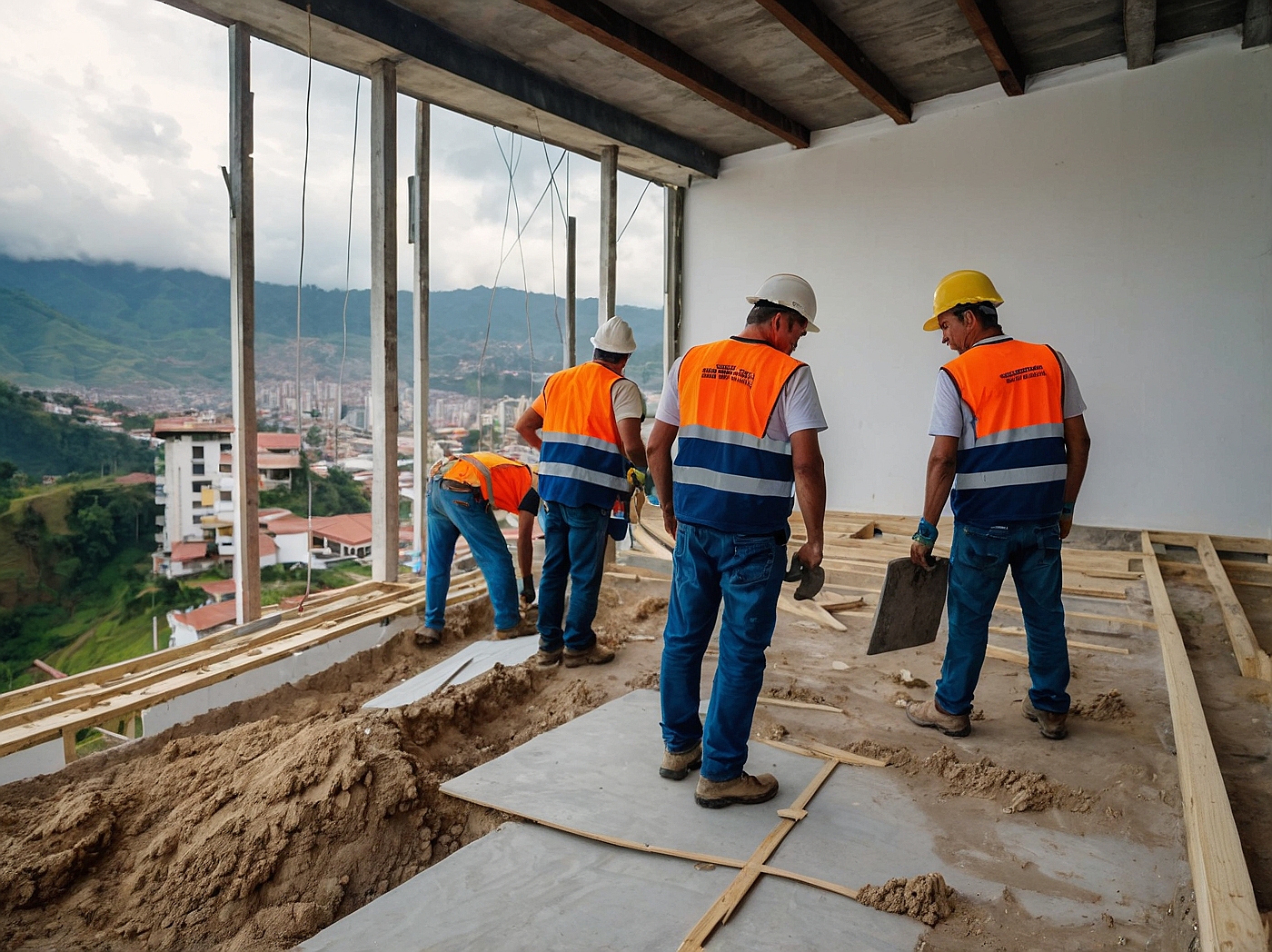
Why Manizales is geotechnically unique
Manizales sits on the slopes of the Central Cordillera at 2,153m elevation. The city's volcanic soil (derived from the Nevado del Ruiz) is highly variable — pockets of good bearing soil alternate with soft, waterlogged areas that require specialized foundations. Add high seismicity and 2,000mm of annual rainfall, and you have one of Colombia's most demanding construction environments.
The three biggest hillside construction mistakes
1) Skipping the geotechnical study and assuming the soil is stable. In Manizales, this leads to foundation failure and settlement within 5–10 years. 2) Inadequate drainage — water on a steep hillside is an enormous force. Without proper drainage, water pressure builds behind retaining walls or infiltrates foundations. 3) Undersized retaining walls that fail under the weight of water-saturated soil.
NSR-10: Colombia's seismic standard
NSR-10 is Colombia's mandatory seismic resistance standard. Manizales is classified in Zona de Amenaza Sísmica Alta, requiring the most demanding structural specifications. All structural elements must be designed by a licensed structural engineer and the construction must be supervised at key stages. Cutting corners on seismic compliance is illegal and dangerous.
How to evaluate a Manizales contractor
Always ask: Do you do a geotechnical study before starting? Is your structural engineer NSR-10 certified? How do you handle drainage on hillside sites? A contractor who can answer these questions confidently understands Manizales construction. One who doesn't might be fine for flat-terrain work, but not for mountain terrain.